Farm Fridays
For 2026, the Livingston County Chamber is trading the tablecloths for trail boots. We are thrilled to introduce Farm Fridays, a new series of on-site farm visits designed to pull back the curtain on the industry that defines our region.
What are Farm Fridays? Instead of bringing the farm to the table, we’re bringing the community to the farm. These are focused, educational "field trips" for adults and neighbors to learn about the grit, innovation, and expertise required to run a modern agricultural operation in Livingston County.
Whether it’s a dairy, specialty crop farm, or other Ag operation, Farm Fridays offer a rare look at the hard work happening right in our backyard. Come prepared to learn, walk the land, and see Livingston County from a whole new perspective.
MAY FARM FRIDAY - Triple H Farms

 Rooted in Livingston County
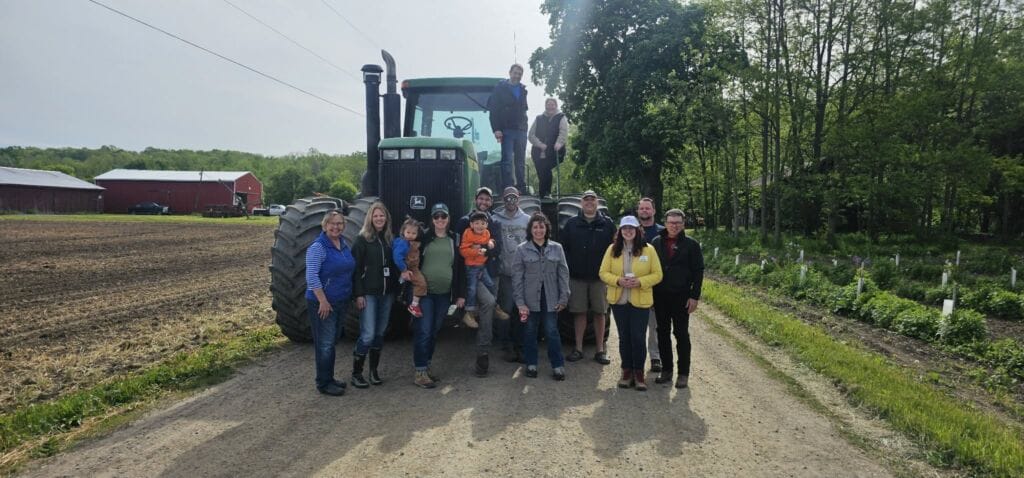
On May 29th, we kicked off Farm Fridays with a visit to Triple H Farms in Geneseo — and it was a wonderful way to step out of the office and onto the land.
Triple H Farms has been part of the agricultural story of the Genesee River Valley since 1959. Today, the farm operates approximately 1,200 acres, growing grain corn, soybeans, snap beans, and peas on some of Livingston County’s rich farmland.
Our visit offered a meaningful behind-the-scenes look at the history, hard work, and innovation behind a modern crop operation. From planting schedules and equipment to weather, soil health, crop planning, and the many decisions that happen long before food reaches our tables, it was a powerful reminder of the expertise and dedication required in agriculture.
Triple H Farms is also part of a larger story of farmland stewardship in our region. In 2015, the Hamilton family partnered with Genesee Valley Conservancy to permanently protect more than 1,100 acres of farmland, helping ensure that this land remains available for agriculture for generations to come.
A big thank you to Triple H Farms for welcoming us, sharing your story, and helping us better understand the industry that continues to shape Livingston County.
JUNE FARM FRIDAY - JoGlenn Farms
On June 26th, we continued our Farm Fridays with a visit to JoGlenn Farms in Caledonia.
Their Story
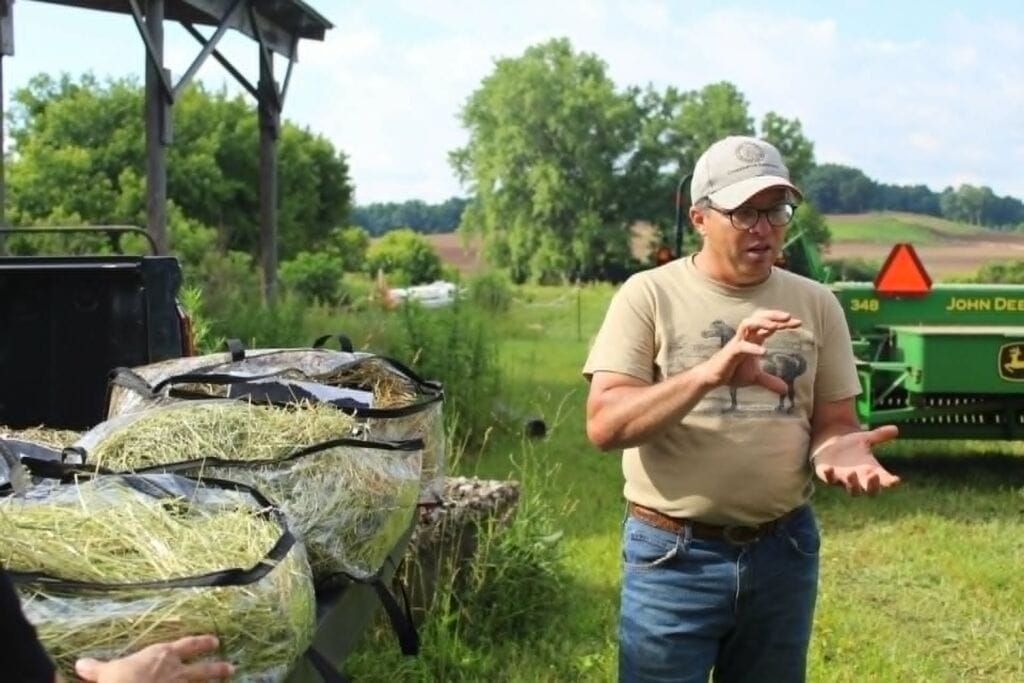
The Estes family arrived in Boston in 1684 from Kent, England, and made their way west into the Genesee Valley, where they have farmed Livingston County soil for roughly two centuries. JoGlenn Farms, in Caledonia, is the third-generation expression of that longer story — the specific ground where Ken’s grandfather, father, and now Ken and Kerry have raised crops, livestock, and a family. Ken reserves the title of “farmer” for his father; for himself, he prefers “land steward,” a word that holds the full weight of what seven generations of care actually means.
What They Do
JoGlenn Farms is a working farm and a research farm. Ken and Kerry operate the farm together while balancing two demanding callings beyond it: Kerry as a cardiac nurse manager, and Ken as Agricultural Program Manager for Cornell Cooperative Extension of Livingston County. The farm hosts on-farm trials — most recently a four-acre, two-cutting teff grass project in collaboration with Cornell — and serves as the proving ground for the equine, forage, and stewardship practices Ken brings into his extension work. It is, in every sense, a farm that teaches.
Breeding Lippitt Morgans
At the heart of JoGlenn Farms is a small, intentional Lippitt Morgan breeding program centered on our stallion, Harwich Attila. The Lippitt Morgan is one of the oldest and most genetically conserved strains of the original American Morgan horse — a true heritage bloodline, prized for soundness, sensibility, and remarkable versatility. They breed for the qualities that built the Morgan reputation in the first place: a willing mind, an honest gait, a stout frame, and the kind of disposition that suits both serious sport and the everyday work of a farm. Their sport-horse focus leans toward eventing and the broader competitive disciplines, but theur deeper aim is simply to produce horses that can do a day’s work and live a long, useful life.
Land Stewardship
Stewardship, for them, is not an abstraction. It is riparian buffer restoration along the creek that feeds the Genesee River; it is rotational management of pasture and hay ground; it is the on-farm research that asks honest questions about what works in our soils and our climate. Ken serves on the Livingston County Farmland Protection Board and has long advocated for conservation easements, Purchase of Development Rights, and — most recently — the inclusion of PFAS contamination in the county’s updated Farmland Protection Plan. We believe farmland is not a commodity to be drawn down but a trust to be passed on. The measure of our stewardship is not what we take from this land, but what the eighth generation finds when they arrive.